
A new US study reveals that hyperscale data centres, vital for cloud computing and artificial intelligence, consumed between 68 and 99 terawatt-hours of electricity in one year, an amount comparable to several US states. This consumption, largely powered by fossil fuels, contributed to approximately 25.7 million metric tons of CO2 emissions, significantly higher than previous estimates.

India, speaking on behalf of the Like-Minded Developing Countries (LMDC), on Sunday flagged concerns over the lack of adequate reflection of equity and the principle of Common But Differentiated Responsibilities and Respective Capabilities (CBDR-RC) in the negotiated text at COP31, as the climate summit concluded in Antalya, Trkiye, without a final climate pact following disagreements over fossil fuel language.

Prince William, speaking at the Earthshot Prize 2026 Impact Assembly in Mumbai, lauded India's progress in sustainable development and climate solutions. He highlighted India's achievement of 50% non-fossil fuel electricity capacity ahead of schedule and its innovative Earthshot Prize winners and finalists, showcasing how growth and environmental protection can coexist.

A new study reveals that past emissions from major oil, gas, coal, and cement producers will continue to impact Earth's environment for centuries, even if emissions cease today. The research highlights that the planet will remain significantly warmer than pre-industrial levels, leading to persistent climate damages and increasing the likelihood of future extreme weather events, forming the basis for accountability lawsuits against these "carbon majors."

The Road Transport Ministry has updated the Central Motor Vehicles Rules 1989 to allow flex-fuel vehicles capable of running on up to E100 (nearly pure ethanol). These amendments include E100 alongside E85 for emission certification and raise the vehicle weight limit for light petrol and diesel vehicles. This move supports India's strategy to reduce crude oil import dependence, with major automakers already developing flex-fuel models for the Indian market.
Scientists are stunned by the discovery of a nine-million-year-old capybara tooth fossil in Chile's Atacama Desert, a region currently devoid of capybaras. This finding not only marks the oldest record of the semi-aquatic rodent in coastal Chile but also significantly challenges the long-standing scientific view that the Atacama Desert has been continuously dry for 40 million years, suggesting a much wetter past.

The climate finance battle once again exposes the deep divide between rich and developing nations.
The Indian Road Transport Ministry has amended the Central Motor Vehicles Rules to permit flex-fuel vehicles capable of running on up to E100 (nearly pure ethanol), a move aimed at reducing dependence on imported crude oil and promoting alternative fuels.

Union Road Transport Minister Nitin Gadkari has dismissed criticism against blending 20 per cent ethanol in petrol fuel as a 'paid campaign'. He highlighted that millions of vehicles are already running on E19-20 blends without widespread issues. Gadkari also addressed concerns about highway quality, promising improvements within two years and detailing plans for monitoring and penalising contractors. He further elaborated on the economic impact of infrastructure development and the expansion of India's highway network.

9 fascinating facts about the dinosaur that shattered auction records.

There are only bad and worse options before him, points out Aakar Patel.

Union Finance Minister Nirmala Sitharaman expressed strong confidence in India achieving over 10 per cent economic growth, advocating for increased technology adoption and innovation. She urged overcoming scepticism and highlighted technology's transformative role in agriculture and public sector reforms, while also launching a new fund and book at an IIT Madras event.

India is set to develop its first 100% hydrogen-powered Direct Reduced Iron (DRI) plant, a Rs 207-crore national pilot project led by CSIR-IMMT. This initiative aims to significantly reduce carbon emissions in the steel sector and achieve net-zero commitments, focusing on adapting the technology to India's domestic iron ore conditions.

Researchers at IIT-Guwahati have developed an inexpensive and efficient catalyst for producing hydrogen from water, a crucial step for the National Green Hydrogen Mission and the transition to sustainable energy. The catalyst uses nickel salt and an anthracene-based organic molecule, offering a cleaner alternative to fossil fuel-derived hydrogen.

Mining major Vedanta has invested over $1 billion in net-zero transition initiatives for FY26, focusing on renewable energy, lower-carbon fuels, energy efficiency, and technology-led interventions to drive its decarbonisation efforts.

Prime Minister Narendra Modi flagged off India's first hydrogen-powered train connecting Jind to Sonipat in Haryana, marking a significant milestone in the country's journey towards clean and sustainable railway mobility and showcasing the success of the 'Make in India' initiative.

'As long as the vehicle has a flex engine, it is irrelevant if the mixture is 15 per cent or 30 per cent; the performance is the same.'

Prime Minister Narendra Modi has highlighted the risks posed by the 'weaponisation' of resources and strategic sea routes, urging India to achieve greater self-reliance in energy to mitigate vulnerabilities to overseas supplies and geopolitical tensions.

'We can integrate AI and tech into education, but that is just a means and not an end.' 'Ultimately, we need to control what happens in a classroom and we need to let teachers innovate their teaching style to suit the needs of Gen Z and beyond.'
Researchers at MIT World Peace University in Pune have developed an innovative thermal energy storage system using a phase change material (PCM)-based battery. This technology addresses the intermittent nature of solar energy by storing excess heat for use after sunset, potentially reducing reliance on conventional fuels for water heating and enhancing energy security.

A World Cup game between Paraguay and France in Philadelphia is at risk due to extreme heat and humidity, linked to climate change and fossil fuel use. A heat dome over the U.S. and Canada has pushed temperatures beyond safe play recommendations, raising concerns about player safety and future tournament scheduling.

Canadian deep-sea fossils push the origin of animal sex and movement back 567 million years, rewriting early evolutionary timelines.

'Energy prices would shoot up with the closure of Hormuz again.'

Despite aggressive expansion, India's solar power sector faces significant hurdles from rising regional disparities in installed capacity and a looming manufacturing glut due to overcapacity in domestic solar equipment production, potentially leading to consolidation and pricing pressures.

China is significantly expanding its nuclear power sector, aiming to become a global leader by 2030. The country has the capacity to construct up to 50 nuclear reactors simultaneously, reducing reliance on fossil fuels.

The closure of the Strait of Hormuz has disrupted some 20 per cent of the global flows but even if it opens, damages to production facilities in the region will take time to repair, points out Sunita Narain.

Mohanlal, mermaids and made-for-each-other couples on OTT this week. Sukanya Verma lists your OTT options.

Union Minister Nitin Gadkari has called for Indian companies to form joint ventures with US companies to leverage new technologies, while also expressing an ambitious target to make India's automobile industry the world's number one within five years.

India and Australia have signed significant agreements covering civil nuclear energy, maritime security, and critical minerals, reinforcing their partnership's role in ensuring a peaceful Indo-Pacific. The pacts facilitate uranium supply from Australia to India and enhance cooperation in defence, cyber, and critical technologies.

Hydrogen fuel cell technology generates electricity through a chemical reaction using hydrogen, with water vapour as the only emission, making it a cleaner alternative to conventional fossil fuel-based traction systems.

Maruti Suzuki Chairman R C Bhargava is pushing for increased government incentives for biogas-powered vehicles over hybrids, emphasising their net-zero carbon emissions and the valuable organic manure they produce, while also advocating for continued GST benefits for electric vehicles.

India generates 9.3 million tonnes of plastic waste annually, nearly 20 per cent of the world's total.

A 150 million year old short-tailed bird fossil discovered in China's Fujian Province pushes back the emergence of modern bird body structures by 20 million years, suggesting birds originated earlier than previously thought. The Baminornis zhenghensis fossil, with its unique combination of modern and ancient features, challenges the previous understanding of bird evolution and suggests a more diverse Jurassic bird fauna.
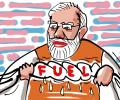
Following through announcements with enforcement of measures is key, as a run through recent Indian economic history shows, points out A K Bhattacharya.

IIT-Guwahati has partnered with Kaashyap Cleantech Innovations to commercialise bio-methanol production technology, which converts greenhouse gases into a versatile liquid fuel, offering environmental and performance benefits.

The United States has announced it will not renew sanctions exemptions for the purchase of Russian and Iranian oil, ending a 30-day waiver that allowed some countries, including India, to continue importing Russian oil despite sanctions related to the Ukraine war.

Finance Minister Nirmala Sitharaman announces increased domestic LPG production to offset import disruptions caused by Middle East tensions, alongside assurances of fertiliser availability and the clearing of UPA-era oil bonds.

A new study reveals that green hydrogen's potential as a sustainable fuel is contingent on the rapid decarbonisation of energy grids worldwide.

India's peak power demand is projected to hit 270 GW this summer, surpassing last year's record of 250 GW.

A new study suggests that using basalt rock instead of limestone in cement production could significantly reduce carbon dioxide emissions, offering a pathway to a greener construction industry.
